On this page
Latex and gel grid sit at the responsive end of the pillow shelf. Press either one and it pushes back at once, where memory foam gives slowly and down simply moves aside. Your head rests on the surface rather than in a hollow, and turning over meets no resistance.
They are different materials with that one behavior in common. Latex is foamed rubber, natural or synthetic. A gel grid is an elastic polymer molded into a honeycomb of open squares, best known from Purple's GelFlex Grid, and it is usually paired with a foam, latex or fiber layer.
Latex
Natural, synthetic and blended latex
Natural latex comes from the sap of the rubber tree. Synthetic latex is made from petroleum-based rubber, and blends mix the two. Product pages use the one word latex for all three, so read the fill line for the word natural and for a percentage.
Two production methods show up in product names. Dunlop latex is poured and baked in one step and tends to be denser, while Talalay adds vacuum and freezing stages and is usually lighter and more even. Either can be cut into a solid block, a contour shape or shredded pieces in a zippered case.
Solid latex pillows are often pinholed, with small holes running through the block. Those holes let air move and make the pillow softer than a solid slab of the same rubber would be.
Feel
Springy, cooler and slow to wear
Latex holds its height well over time, and buyers who switch from fiber or down often remark that the pillow still keeps its shape after long use. The springy feel divides people. Some like that it never leaves a dent, while others call it rubbery or say their head seems to bounce.
Compared with memory foam, latex is generally described as sleeping cooler, because your head sits higher on the surface and pinholes let air through. A chiropractor writing for Cleveland Clinic says the same. Research is less tidy about feel than about shape: a 2021 review of pillow trials found that height and shape seemed to matter more for neck alignment than whether the fill was rubber or feather.
Weight is the other surprise. A solid latex pillow is noticeably heavier than a fiber pillow of the same size, and it does not squash down for a stomach sleeper the way fiber does.
Allergy
Latex allergy comes first
With a natural rubber latex allergy, this is the one material on the shelf to rule out. The allergy is to proteins in natural rubber, reactions range from hives and a runny nose to anaphylaxis, and the ACAAI says the best treatment is avoiding latex products. Its page does not discuss pillows, but a natural latex pillow is a latex product.
Synthetic rubber is not natural latex, and the ACAAI says it does not trigger reactions in people allergic to natural latex. A pillow sold as latex can still be natural, synthetic or a blend, and a cover does not change what is inside. If you have the allergy, ask a clinician before buying any latex pillow rather than relying on a product title.
Organic labels
GOLS and what it covers
The Global Organic Latex Standard, developed by Control Union, certifies products made of organically grown natural latex, bedding included. Its criteria cover latex from certified organic plantations under USDA NOP or EU rules, limits for harmful substances, emission tests and polymer and filler percentages, with transaction certificates that trace the material from plantation to sale.
GOLS tells you where the latex came from and that it met those limits. In our reading, it does nothing for a latex allergy, because organic natural latex is still natural latex. CertiPUR-US, the label you see most on foam pillows, does not cover latex at all, and pillow certifications explains what each label can and cannot show.
Gel grid
How a gel grid works
A gel grid is a flexible polymer molded into rows of hollow columns. Under your head the column walls buckle where the weight is highest and stay upright around it, so the grid cradles without the slow sink of memory foam. The open squares leave room for air, which is why grid pillows are usually sold as cooling.
Grid layers are heavy and firm to the touch, and most grid pillows pair the grid with a softer layer or a removable insert to tune the height. Find out how many layers are included and whether one can come out. Buyers also mention the weight and a rubbery feel through thin covers, so the cover matters more here than on most pillows. Our list of cooling pillows ranks grid designs beside every other pillow sold as cooling.
Care
Cleaning latex and grid pillows
Neither core belongs in the washer. Water and agitation can tear a latex block, and sunlight and heat break natural rubber down over time, so care labels send you to spot cleaning and airing in the shade. Gel grids can often be wiped or rinsed and air dried, but read the label first, since the base under the grid may not tolerate water.
Keep the washing to the removable cover. For dust mites, Mayo Clinic advises dustproof or allergen-blocking covers of tightly woven fabric and weekly washing of pillowcases in water of at least 130°F (54.4°C). An encasing over a latex or grid pillow follows that advice without wetting the core.
Who it suits
Who should pick them, and what to check
These pillows suit you if memory foam feels like sinking into sand and down feels like nothing at all, if you sleep warm, or if you would rather pay more once than replace a fiber pillow often. Skip them if you have a latex allergy, if you want a soft pillow to scrunch, or if a heavy pillow annoys you.
On the product page, five details decide most of the fit.
- Natural, synthetic or blended latex, with percentages.
- Solid block, contour or shredded fill, and the height of each option.
- For grids, the number of layers and whether an insert can come out.
- GOLS or OEKO-TEX STANDARD 100 labels, with numbers you can look up.
- The trial period, because the springy feel is easy to love or to hate.
In our catalogue
The latex & gel grid pillows we score
5 models, median score 6.2, from $149 to $211 per pillow.
| # | Photo | Model | Score | Fill | Adjustable | Stars | Ratings | Per pillow |
|---|---|---|---|---|---|---|---|---|
| Early |  |
Purple Freeform Pillow | 7.0 | Gel grid | Yes | 4.3 | 297 | $194 |
| Early | 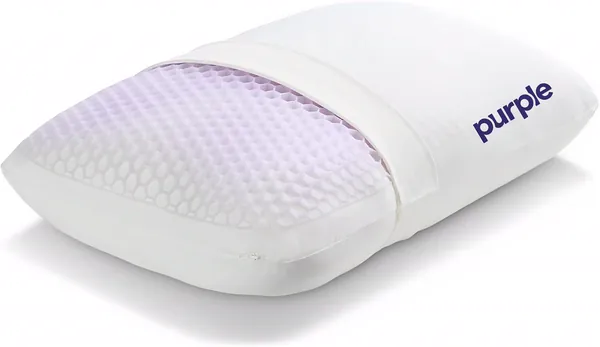 |
Purple GridCloud Pillow | 6.4 | Gel grid | No | 4.1 | 136 | $149 |
| 38 | 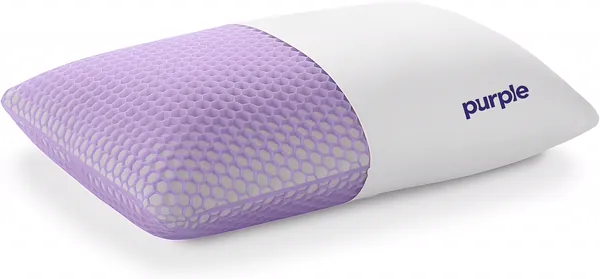 |
Purple Harmony Pillow | 6.2 | Latex | No | 4.2 | 7,142 | $194 |
| 41 | 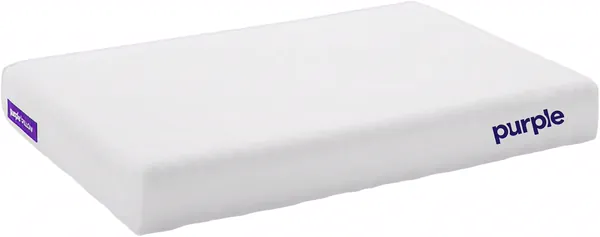 |
Purple Pillow, GelFlex Grid | 5.9 | Gel grid | Yes | 4.2 | 3,263 | $211 |
| Early | 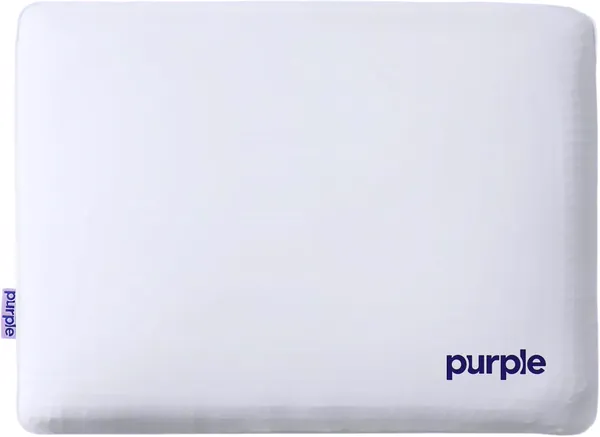 |
Purple DreamLayer Pillow | 5.9 | Gel grid | Yes | 4.0 | 272 | $194 |
Questions
Questions buyers ask
Is a latex pillow safe if you have a latex allergy?
Not if it contains natural latex. Allergists at the ACAAI advise people with a natural rubber latex allergy to avoid latex products, and a natural latex pillow is one. Synthetic latex does not trigger reactions in people allergic to natural latex, but labels can be vague, so ask a clinician before you buy.
Does a latex pillow sleep cooler than memory foam?
Many people find that it does, because your head sits higher and pinholes let air through, and a chiropractor writing for Cleveland Clinic makes the same point. With no common temperature test published by makers, the comparison rests on reports rather than numbers.
Can you wash a latex pillow?
Not the core. Spot clean it, air it out of direct sunlight and wash only the removable cover. For shredded latex fills, follow the maker's care label.
Why is your gel grid pillow so heavy?
The grid is a dense elastic polymer, and it is usually paired with a foam, latex or fiber layer. That weight is part of why the pillow stays put. If it feels too tall, look for a removable layer before deciding it does not suit you.