On this page
Every bird-fill pillow is a mix of two things. Down is the soft cluster that grows under the outer feathers of ducks and geese, with no hard quill. Feathers are flatter and carry a quill. More down makes a lighter, softer pillow that springs back after you lift your head, while more feather makes a heavier, firmer pillow that costs less.
Both fills move freely inside the case. You can punch a hollow for your head, fold the pillow over or push fill under your neck, and it will hold that shape until you change it. That freedom is the reason people love bird fill, and also the reason it flattens.
Labels
What 'down' on a label has to mean
The share of down is the first number to look for. Under the U.S. labeling standard explained by IDFL, a laboratory that tests down and feather, a product labeled simply 'down' must contain at least 75% down clusters, with no tolerance. Blends must meet the down share they state, and loose down fiber does not count as cluster. Industry and state regulators adopted the standard to meet the FTC's expectations, so it is an industry standard rather than the text of a federal rule.
A label reading 75% down and 25% feather therefore sits at the lower edge of what may be called down, and a pillow sold as feather and down is mostly feather. Some product pages say down pillow in the title and give a feather-heavy blend further down the page. Trust the fill line on the law label sewn into the pillow over the title.
Fill power
Fill power, and when it matters
Fill power measures how much space a fixed weight of down fills once it is allowed to expand. A higher number means larger clusters that trap more air, so the pillow lofts higher for the same weight and recovers faster after you lift your head.
The standard IDFL describes does not require fill power on the law label. If a maker advertises a fill power, the accepted tolerance is 5%. A pillow that gives the down share but no fill power breaks no rule, though it gives you less to compare.
Fill power describes the down, not the pillow. Two pillows with the same number can feel very different if one is stuffed fuller than the other, so look for the fill weight in ounces as well when the maker gives it.
Over time
How bird fill behaves over months
Down and feather conform closely, and people who like to shape their pillow every night tend to rate them well. Staying power is the weak point. Harvard Health notes that feather pillows conform to the neck but collapse over time, and suggests replacing them every year or so, the only replacement interval we found from a medical publisher.
Opinion on neck support is split. A chiropractor writing for Cleveland Clinic finds that feather pillows give little neck stability, while Harvard Health treats their moldability as useful. In a 2021 review of pillow trials, side-lying neck alignment did not appear to differ between rubber and feather pillows, and shape and height seemed to matter more than fill.
Daily fluffing slows the flattening. Grab the two ends, push them together a few times and give the pillow a shake to separate clusters that have packed down overnight.
Complaints
What buyers complain about
The same handful of problems comes up across bird-fill pillows, and most trace back to the feather share or the shell.
- Feather quills poking through the shell, more often with feather-heavy blends and looser weaves.
- Flattening within months, and a pillow that needs fluffing every night.
- An animal smell on arrival that usually fades once the pillow airs out.
- Clumping after a wash when the fill was not dried all the way through.
- Rustling from crisp, tightly woven shells when you turn your head.
Welfare
RDS and where the down came from
The Responsible Down Standard, run by Textile Exchange, is about the birds. It prohibits live plucking, including molt harvesting, and force-feeding, and it relies on third-party audits from the farm onward with a chain of custody to the finished product.
RDS says nothing about fill quality, cleanliness or allergies. A pillow can carry it with a modest down share, and a pillow full of high fill power down can carry no welfare label at all. If animal welfare matters to you, look for RDS by name, and see pillow certifications for how it sits beside the other labels on a pillow.
Care and allergies
Washing down, and what allergy sources say
Many down pillows can be machine washed on a gentle cycle and tumble dried on low with a few dryer balls, but the care label decides. Drying is the slow part. A pillow that feels dry on the outside can be damp in the middle, and damp down clumps and smells, so expect the dryer to run far longer than for a load of towels.
Allergy advice is thinner than shoppers expect. We found no medical authority that addresses down pillow allergy directly. The dust-mite guidance from MedlinePlus applies to any pillow: mite-proof covers, plus washing bedding and pillows weekly at 130 to 140°F (54.4 to 60°C), within what your care label allows.
If you react to feathers, or a clinician has told you to avoid them, choose a down alternative instead. Polyester fill is also simpler to wash at home, which counts if you wash bedding often.
Who it suits
Who it suits, and what to check
Down suits you if you want a light, squashable pillow you can shape every night and you do not mind fluffing it. Feather-heavy blends give more body for less money, as long as you can live with the odd quill. Skip both if you need a pillow that holds one height without help, or if feathers are on your avoid list.
On the product page, five lines tell you more than the photos do. Our list of the best down and feather pillows ranks them on the same score as every other fill.
- The down and feather split in percent, and a title that matches it.
- Fill power, if given, and the fill weight.
- The shell fabric and whether it is described as downproof.
- RDS, if welfare matters to you.
- Whether the whole pillow can be machine washed and tumble dried.
In our catalogue
The down & feather pillows we score
23 models, median score 6.3, from $14.25 to $109.99 per pillow.
| # | Photo | Model | Score | Fill | Adjustable | Stars | Ratings | Per pillow |
|---|---|---|---|---|---|---|---|---|
| 2 | 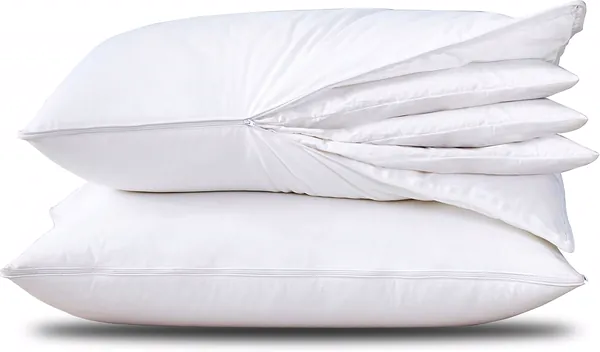 |
Three Geese Adjustable Layer Goose Feather Pillow | 7.9 | Feather & down | Yes | 4.4 | 5,006 | $44.99 |
| Early | 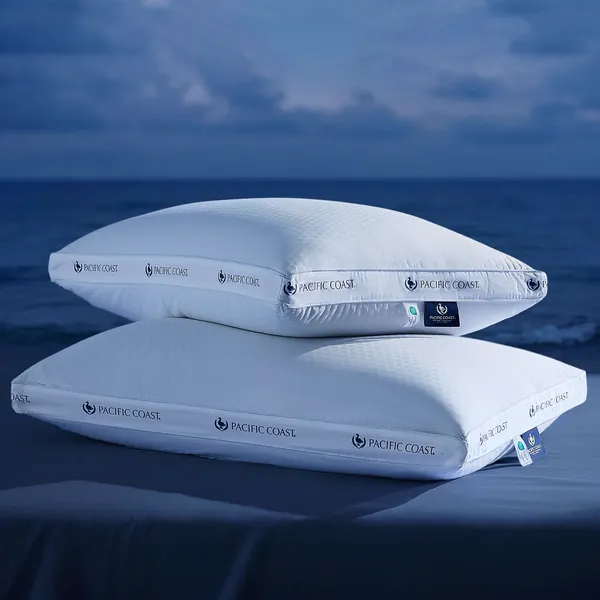 |
Pacific Coast Adjustable Cooling Down Pillow | 7.8 | Feather & down | Yes | 4.2 | 82 | $75 |
| Early | 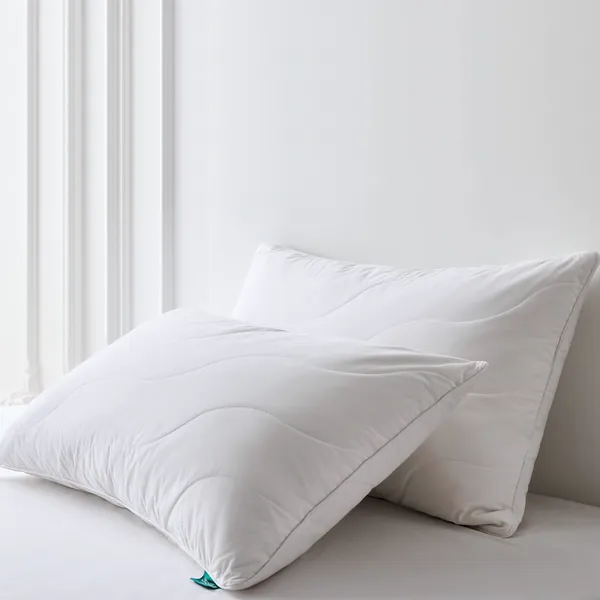 |
Three Geese Goose Feather & Down Pillow | 7.1 | Feather & down | No | 4.3 | 239 | $27.20 |
| Early | 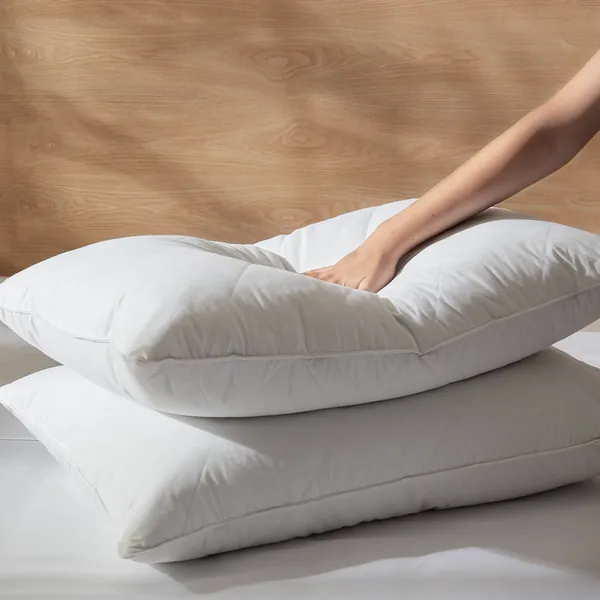 |
Three Geese Goose Feather Pillow, Organic Cotton | 7.0 | Feather & down | No | 4.3 | 120 | $24.99 |
| 25 | 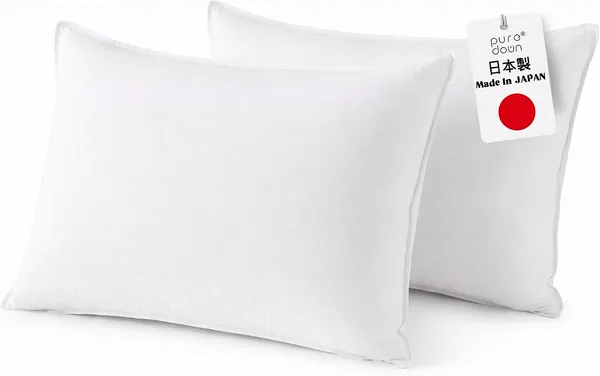 |
Puredown White Goose Down Feather Pillow, Made in Japan | 6.6 | Feather & down | No | 4.4 | 662 | $50 |
| 27 | 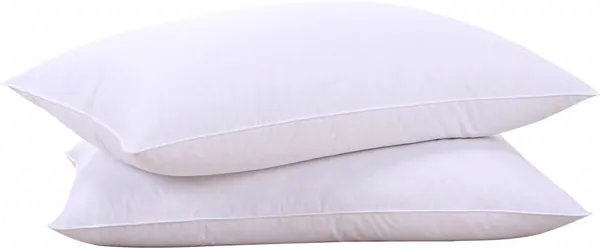 |
Puredown Goose Feather & Down Pillow, Cotton Cover | 6.5 | Feather & down | No | 4.2 | 16,007 | $20 |
| 31 | 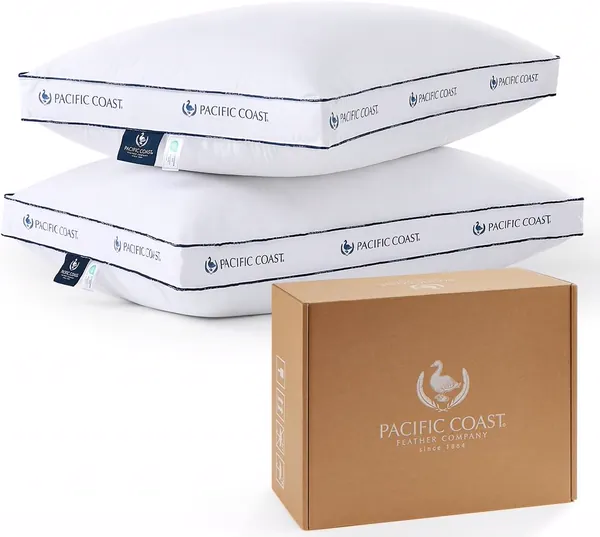 |
Pacific Coast Firm Goose Feather & Down Pillow | 6.5 | Feather & down | No | 4.2 | 731 | $50 |
| Early |  |
Three Geese Cooling Goose Down Feather Pillow | 6.5 | Feather & down | No | 4.2 | 31 | $28.12 |
| Early | 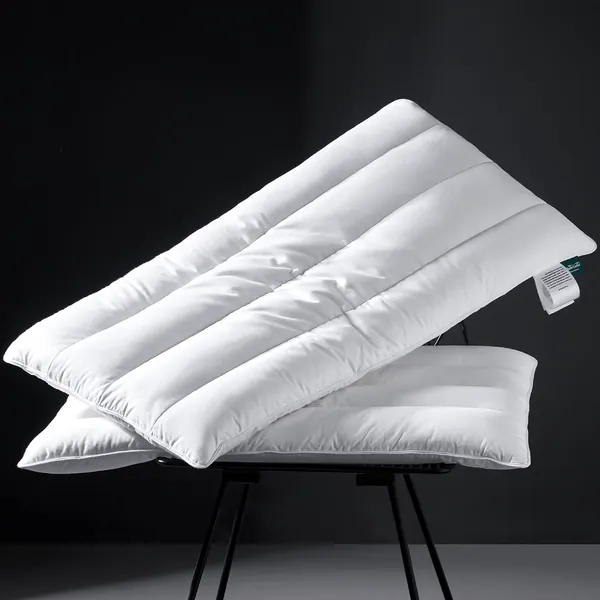 |
Three Geese Thin Flat Goose Feather Pillow | 6.4 | Feather & down | No | 4.0 | 40 | $37.49 |
| 32 | 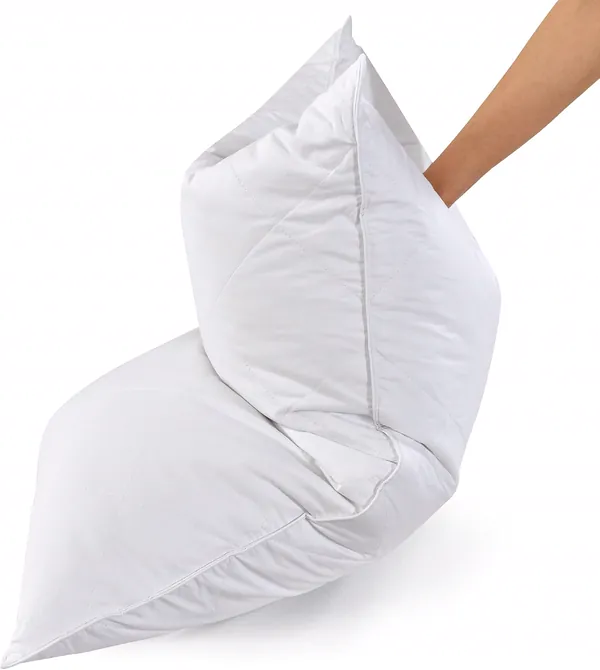 |
Three Geese Goose Feather Pillow, 600 Thread Count | 6.3 | Feather & down | No | 4.3 | 13,607 | $24.99 |
| 33 | 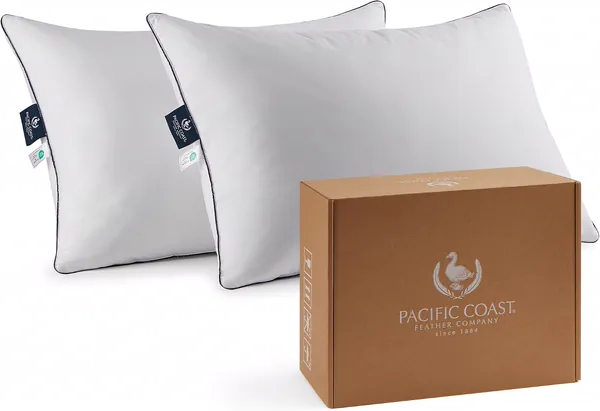 |
Pacific Coast Goose Feather & Down Hotel Pillow | 6.3 | Feather & down | No | 4.1 | 2,167 | $30 |
| 34 | 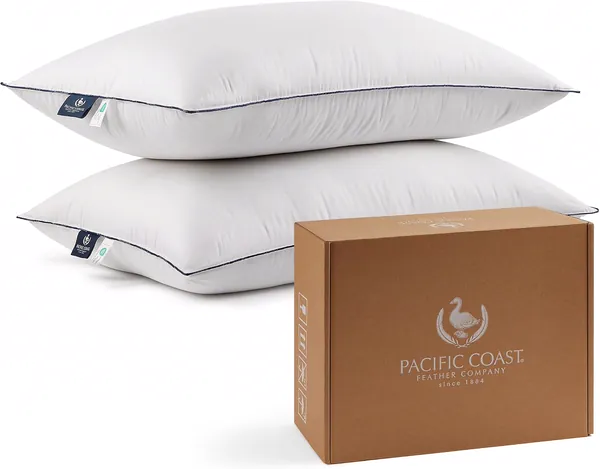 |
Pacific Coast 3-Chamber Feather & Down Pillow | 6.3 | Feather & down | No | 4.1 | 1,093 | $48 |
| 36 | 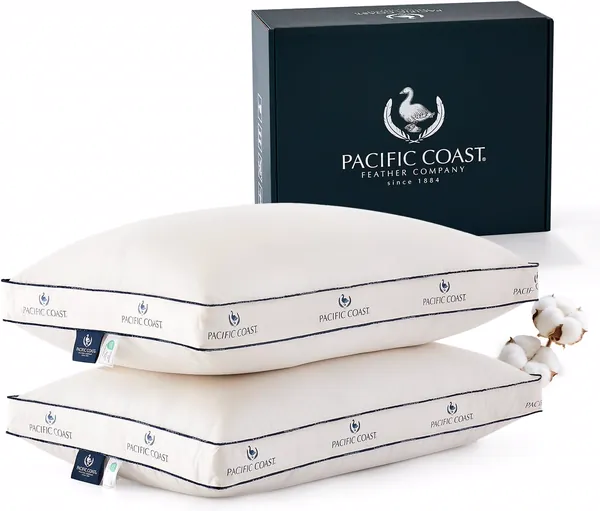 |
Pacific Coast Organic Cotton Feather & Down Pillow | 6.3 | Feather & down | No | 4.1 | 494 | $54 |
| 37 | 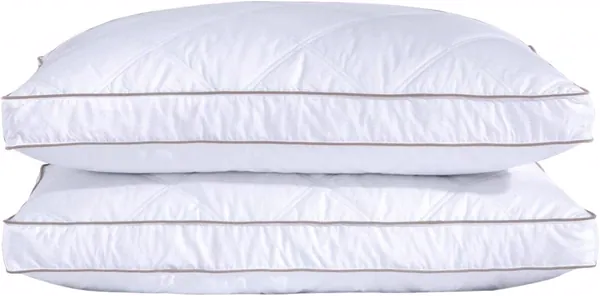 |
Puredown Gusseted Goose Feather & Down Pillow | 6.2 | Feather & down | No | 4.2 | 18,419 | $25.95 |
| Early | 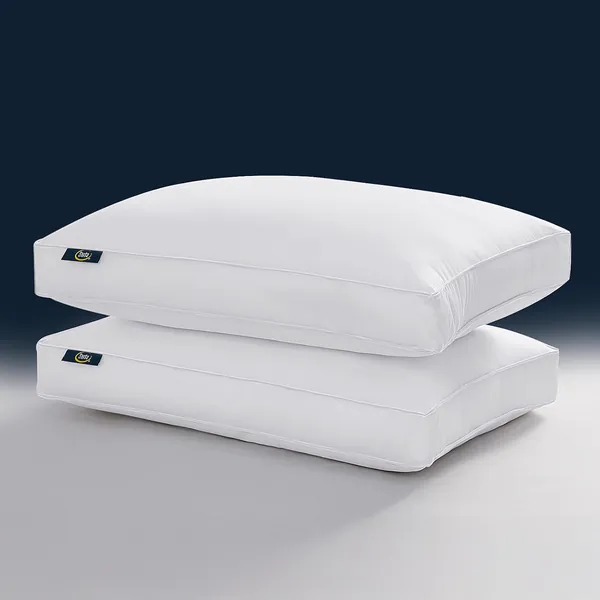 |
Serta Hotel Collection Pillow | 6.2 | Feather & down | No | 4.0 | 250 | $30.92 |
| Early | 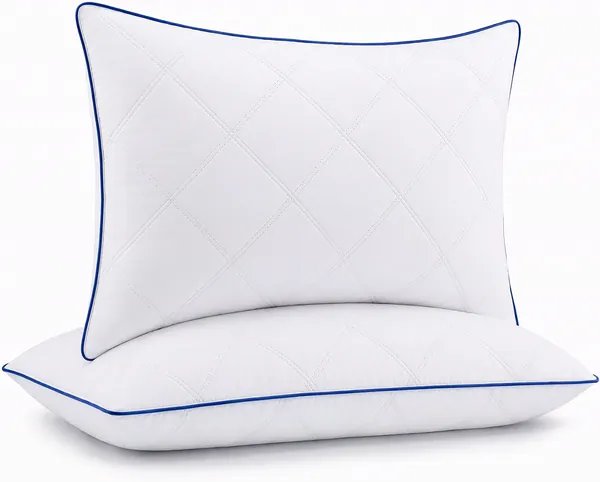 |
Puredown Gusseted Hotel Feather Pillow | 6.0 | Feather & down | No | 4.3 | 274 | $14.25 |
| 42 | 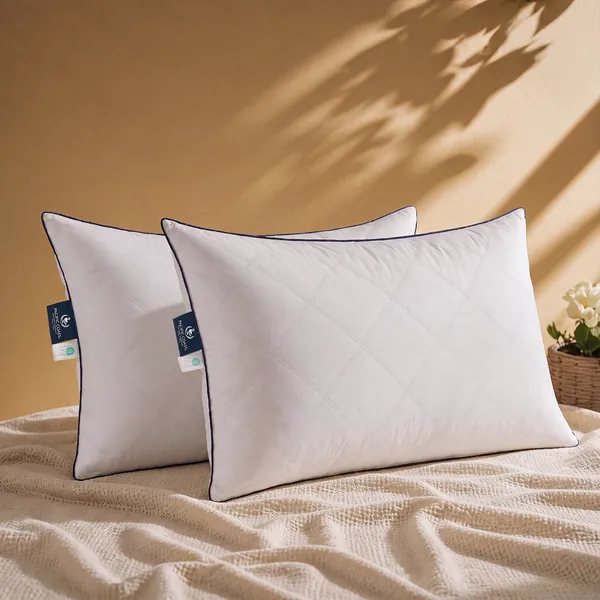 |
Pacific Coast Premium Goose Feather & Down Pillow | 5.9 | Feather & down | No | 4.0 | 780 | $34.99 |
| Early | 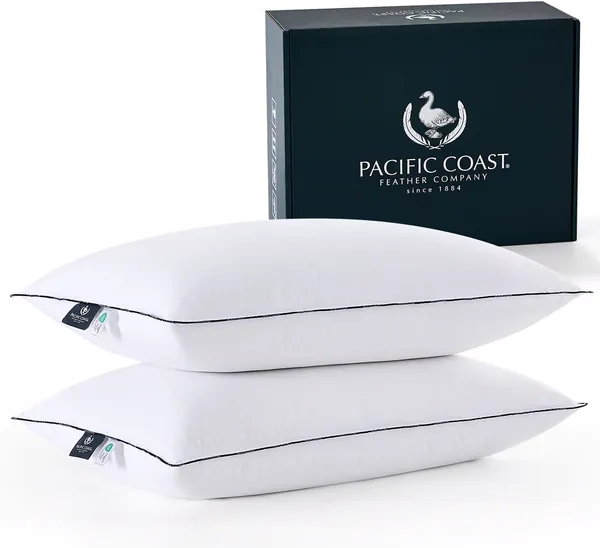 |
Pacific Coast White Goose Down Fiber Pillow | 5.9 | Feather & down | No | 4.2 | 200 | $107.50 |
| 45 | 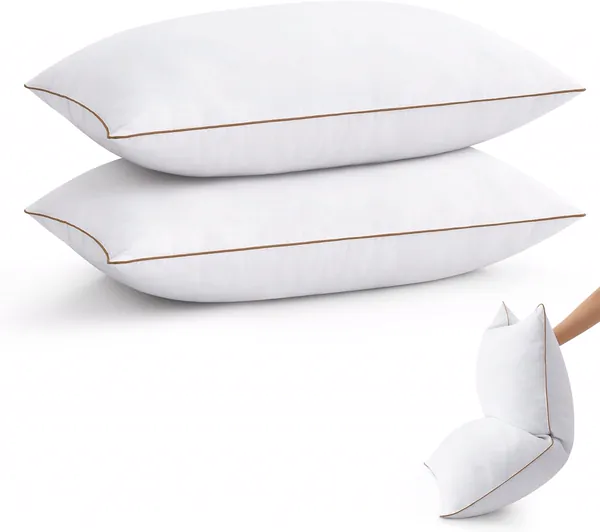 |
Puredown Fluffy Goose Feather Down Pillow | 5.7 | Feather & down | No | 4.2 | 341 | $19 |
| Early | 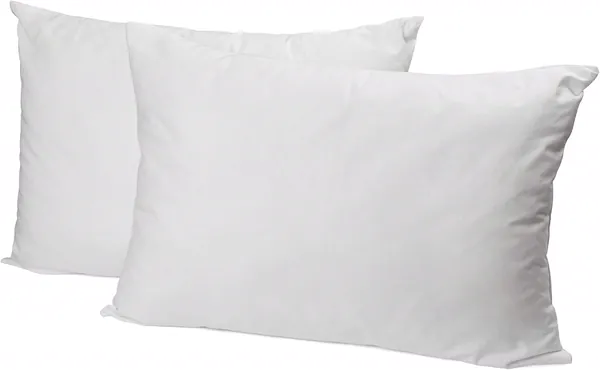 |
Pacific Coast Touch of Down Pillow | 5.6 | Feather & down | No | 4.0 | 89 | $84.50 |
| Early | 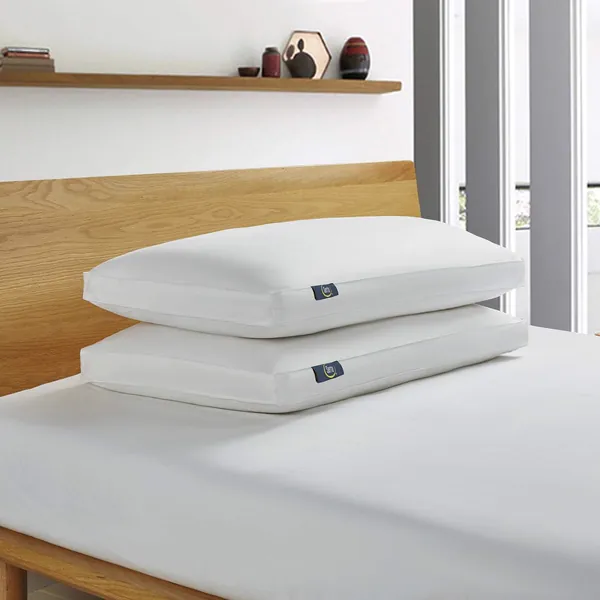 |
Serta Goose Feather & Down Fiber Pillow | 5.5 | Feather & down | No | 4.0 | 168 | $26.28 |
| Early | 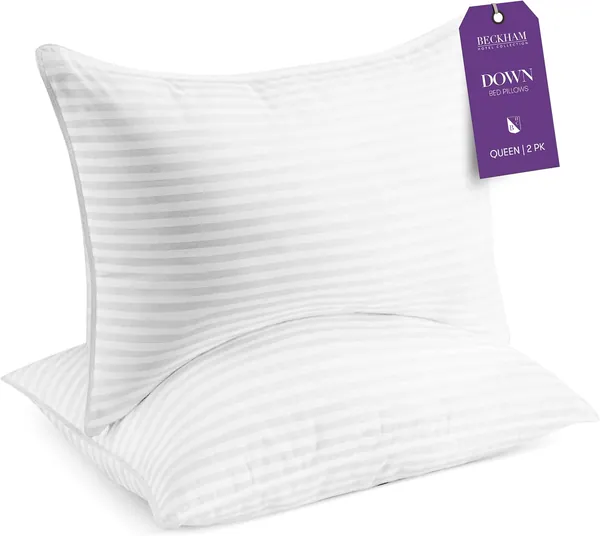 |
Beckham Hotel Collection Down Pillow | 5.5 | Feather & down | No | 4.2 | 142 | $100 |
| Early | 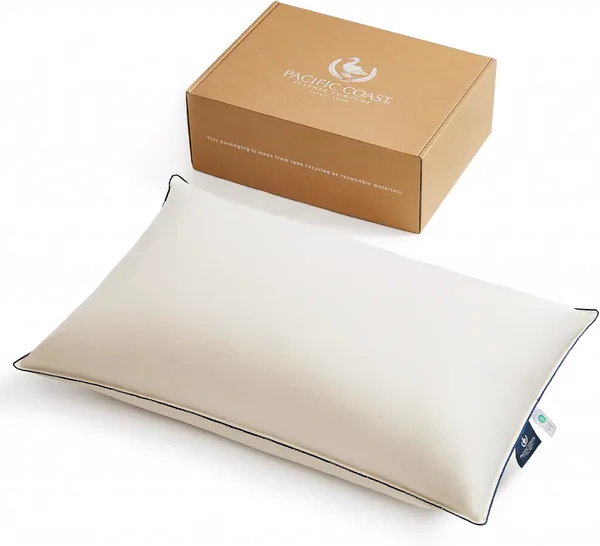 |
Pacific Coast 650 Fill Power Down Pillow | 5.2 | Feather & down | No | 4.0 | 52 | $109.99 |
Questions
Questions buyers ask
Does a pillow labeled 'down' mean you get all down?
No. Under the U.S. labeling standard explained by IDFL, a pillow labeled 'down' must hold at least 75% down clusters, so up to a quarter can be feather and other material. A blend must state its down share, and that share is the number to compare.
What fill power do you need in a down pillow?
No single number fits everyone. Higher fill power means larger clusters and more loft per ounce, so the pillow lofts and recovers more easily. For a softer, lower pillow, less fill can matter more than a high number.
How often should you replace a feather pillow?
Harvard Health suggests replacing feather pillows every year or so, because they collapse over time. A pillow that stays flat after fluffing, lumps that do not break up and quills poking through are the signs. Our replacement guide covers the rest.
Does RDS mean your down pillow is better quality?
No. RDS covers bird welfare and traceability: no live plucking, no force-feeding and an audited chain of custody. Fill power, down share and allergies are outside it.