On this page
Memory foam is polyurethane foam made to recover slowly. Press a hand into it and the dent stays for a moment before the surface rises back. In a pillow that slow return is the whole point: your head sinks to a depth set by its weight and the firmness of the foam, then stays there instead of bouncing.
Pillows use it in two forms. A solid block comes as a plain loaf or as a contour shape with a raised roll for the neck. Chopped foam blown loose into a zippered case behaves like a different material, and shredded memory foam is a separate choice with its own trade-offs.
How it feels
Slow sink, fixed height
If you like a pillow that holds still, solid foam is the easiest way to get one. It does not shift in the night, there is nothing to fluff, and the height you feel on the first night stays close to the height you feel months later, as long as the foam is dense enough. Lighter foams soften sooner, and product pages rarely say which kind you are buying.
Temperature changes the feel as well. Many memory foams firm up in a cool room and soften as they warm against your skin, so a pillow that feels stiff when you first lie down can feel softer a few minutes later. Buyers who send foam pillows back usually describe a different problem: the pillow is the wrong height, and nothing can be done about it.
That fixed height is the main decision. A solid pillow suits you only if its loft matches your shoulder width and your mattress, and the guide to loft by sleep position shows how to size it before you order.
Shapes
Loaf or contour
A loaf is a rectangle of foam, often with a gently rounded top. With a contour pillow, the block is cut into two rolls of different height with a dip between them, and the maker usually says which edge goes under the neck. Tempur-Pedic sells its TEMPUR material in both shapes, a reminder that one foam can become very different pillows depending on the cut.
Contour pillows are often narrower and lower in the middle than the photos suggest. If you change position through the night, find the width and both roll heights on the product page, because a pillow cut for back sleeping can feel too low once you roll onto your side.
Measurements deserve that attention. Researchers who pooled pillow trials in a 2021 review found that shape and height seemed to matter more for neck alignment than the fill itself.
Out of the box
The new-foam smell
Smell is one of the complaints buyers raise most often about new foam pillows. Foam that has spent weeks squeezed in a vacuum bag releases an odor once it opens, and product pages often suggest airing it out before the first night. Most buyers report that the smell fades. A minority return the pillow because it does not.
The odor comes from volatile organic compounds, the family of gases the EPA lists for furnishings and building materials. Its advice is ventilation and removing sources, and it also says little is known about health effects at the levels usually found in homes. Leaving the pillow unwrapped in a room with an open window is the practical version of that advice.
Certification narrows what is in the foam. CertiPUR-US tests the polyurethane foam itself for low VOC emissions, under 0.5 parts per million, and for the absence of formaldehyde, heavy metals and listed flame retardants. It certifies the foam rather than the pillow or the brand, and its own wording is low emissions, not none. The page on pillow certifications explains how to read that label and what it leaves out.
Heat
Why foam pillows feel warm
Solid foam is a dense block with little air moving through it, and your head sinks into it rather than resting on top. That combination holds warmth, and heat comes up again and again in buyer reviews of solid foam. Makers answer with gel infusions, holes punched through the block and covers sold as cooling.
Those answers change how the surface feels against your face more than they change the core. Gel draws heat for a while and then warms to your temperature, and a cooling cover works mostly in the first minutes. If you already wake up hot, an open design such as latex or shredded fill tends to suit you better than a gel version of the same solid block.
Care
Washing a foam pillow
Solid memory foam is usually spot clean only. Water soaks into the cells, the block takes a long time to dry, and a washer can tear it, so care labels on foam pillows send you to the removable cover instead. That cover is the part you wash, and a zipper on it is worth confirming before you buy.
Dust-mite advice from medical sources leans on covers for that reason. Mayo Clinic recommends keeping pillows in dustproof or allergen-blocking covers of tightly woven fabric and washing pillowcases weekly in water of at least 130°F (54.4°C). The ACAAI lists pillows among the places mite particles collect. An encasing under the pillowcase is the step you can take with a pillow that cannot go in the machine.
Foam does not go flat the way feather does. It wears differently: the center softens, a dent stops recovering, or the edges start to crumble. Any one of those signs means the pillow no longer holds the height you bought it for.
Who it suits
Who should pick solid foam, and who should skip it
Solid foam rewards people who already know what they need. It punishes guesswork, because the height arrives fixed and stays that way.
- Pick it if you sleep on your back or side, know the loft you need and want it to stay put.
- Pick it if feather and fiber pillows feel too loose and you prefer one steady shape.
- Pick it if noise bothers you: foam makes no sound when you turn over.
- Skip it if you already wake up warm, or if you sleep on your stomach and most blocks feel too tall.
- Skip it if you want to wash the whole pillow, not just the cover.
Before you buy
What to read on the product page
A few lines on the product page tell you most of what the photos cannot. Our ranked list of memory foam pillows applies the same score to every one of them.
- Height in inches, and for contour shapes both roll heights and the width.
- Whether the core is one block or several layers, and whether the maker names the density of the foam.
- A CertiPUR-US mention for the polyurethane foam.
- The cover fabric, whether it zips off, and how it may be washed.
- The trial period, since a fixed-height pillow is the hardest kind to judge before you sleep on it.
In our catalogue
The memory foam pillows we score
11 models, median score 6.4, from $17.09 to $130.90 per pillow.
| # | Photo | Model | Score | Fill | Adjustable | Stars | Ratings | Per pillow |
|---|---|---|---|---|---|---|---|---|
| 9 | 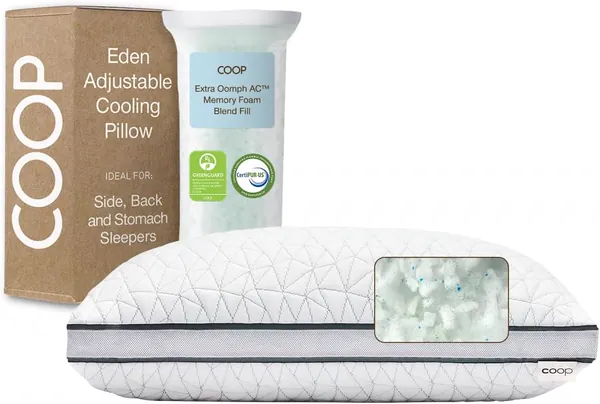 |
Coop Sleep Goods Eden Pillow | 7.3 | Solid memory foam | Yes | 4.4 | 15,193 | $109 |
| 20 | 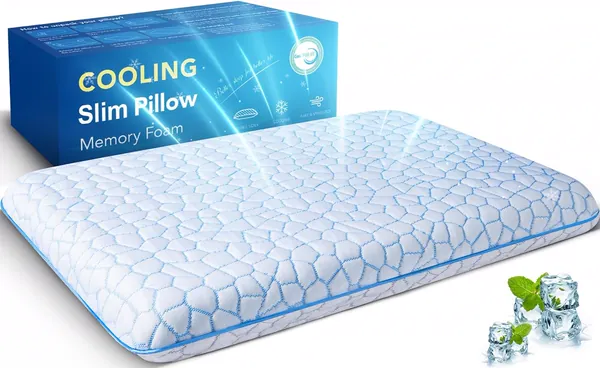 |
SUPA MODERN Thin Stomach Sleeper Pillow | 6.8 | Solid memory foam | No | 4.4 | 531 | $33.99 |
| 23 | 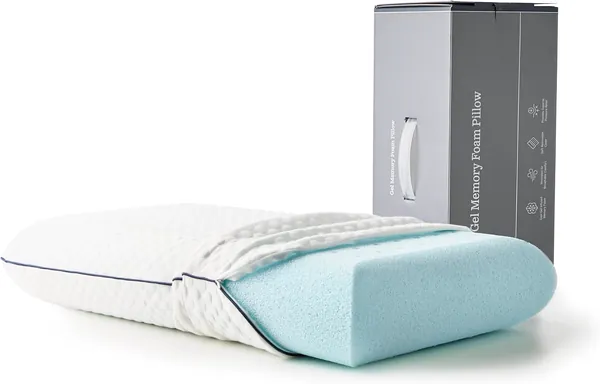 |
WEEKENDER Ventilated Gel Memory Foam Pillow | 6.6 | Solid memory foam | No | 4.3 | 41,758 | $29.99 |
| 29 | 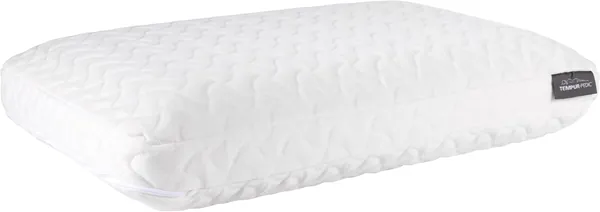 |
Tempur-Pedic TEMPUR-Cloud Pillow | 6.5 | TEMPUR memory foam | No | 4.3 | 7,646 | $71.40 |
| 30 | 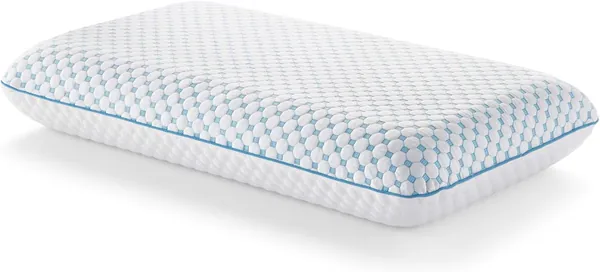 |
WEEKENDER Gel Memory Foam Pillow, Reversible Cover | 6.5 | Solid memory foam | No | 4.4 | 1,029 | $54.57 |
| Early | 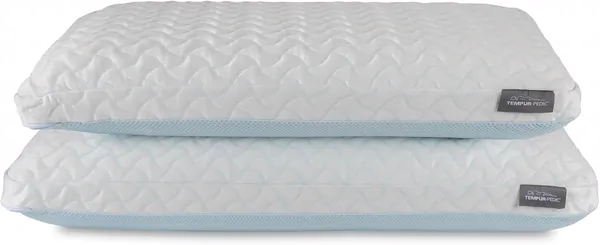 |
Tempur-Pedic TEMPUR-Cloud + Cooling Pillow | 6.4 | TEMPUR memory foam | No | 4.2 | 166 | $79.50 |
| Early | 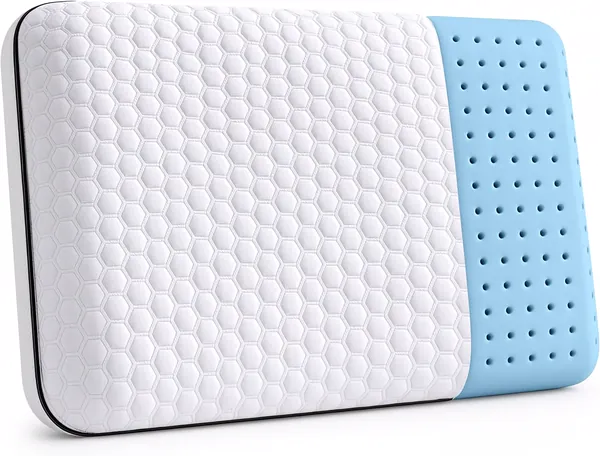 |
Utopia Bedding Memory Foam Pillow | 6.2 | Solid memory foam | No | 4.1 | 76 | $17.09 |
| 39 | 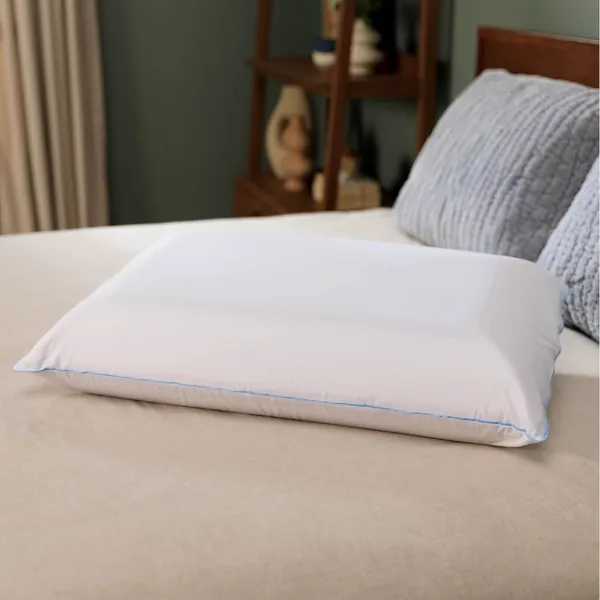 |
Tempur-Pedic TEMPUR-Cloud Dual Cooling Pillow | 6.1 | TEMPUR memory foam | No | 4.2 | 4,556 | $130.90 |
| 48 | 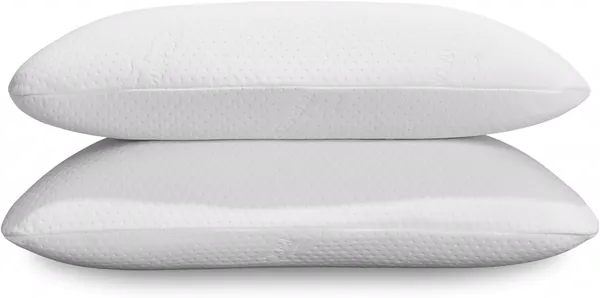 |
Tempur-Pedic TEMPUR-Symphony Pillow | 5.4 | TEMPUR memory foam | No | 4.2 | 4,919 | $74.50 |
| 50 |  |
Casper Hybrid Pillow | 5.0 | Solid memory foam | No | 4.2 | 432 | $114.30 |
| 52 | 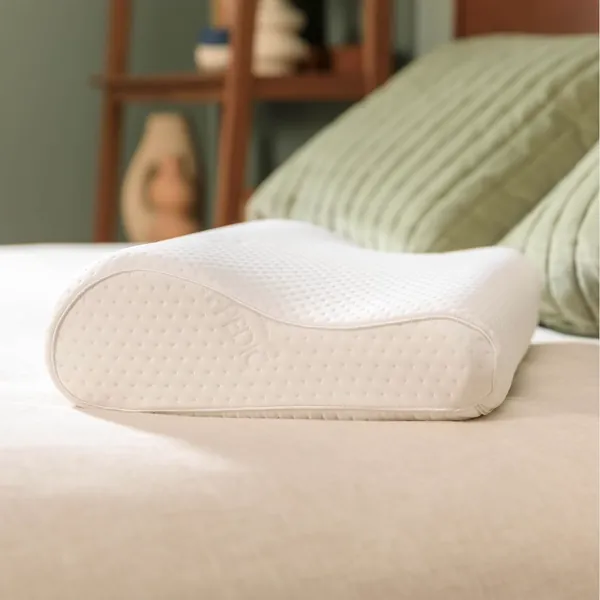 |
Tempur-Pedic TEMPUR-Neck Pillow | 4.7 | TEMPUR memory foam | No | 4.0 | 8,049 | $74.50 |
Questions
Questions buyers ask
Will your new memory foam pillow lose its smell?
For most buyers the smell fades once the pillow has aired out for a few days. Leave it unwrapped in a ventilated room before the first night. If the odor is still strong after a week or two, the trial period is there for that.
Can you wash a memory foam pillow?
Usually not the core. Solid foam holds water and dries slowly, so most care labels say spot clean only and send the removable cover to the washer. Read the label on your own pillow, because a few makers allow gentle washing.
Is memory foam a good choice if you have a dust mite allergy?
No pillow fill treats an allergy. Mayo Clinic and MedlinePlus advise keeping pillows in mite-proof covers, and MedlinePlus advises washing bedding and pillows weekly at 130 to 140°F (54.4 to 60°C). Since a foam core cannot go in the washer, a zippered encasing over it is the part of that advice you can follow.
How long does a memory foam pillow keep its shape?
No medical or standards body sets a replacement interval for foam pillows. Dense foam generally holds up longer than light foam. Watch for a dent that does not recover, a soft center or crumbling edges.